
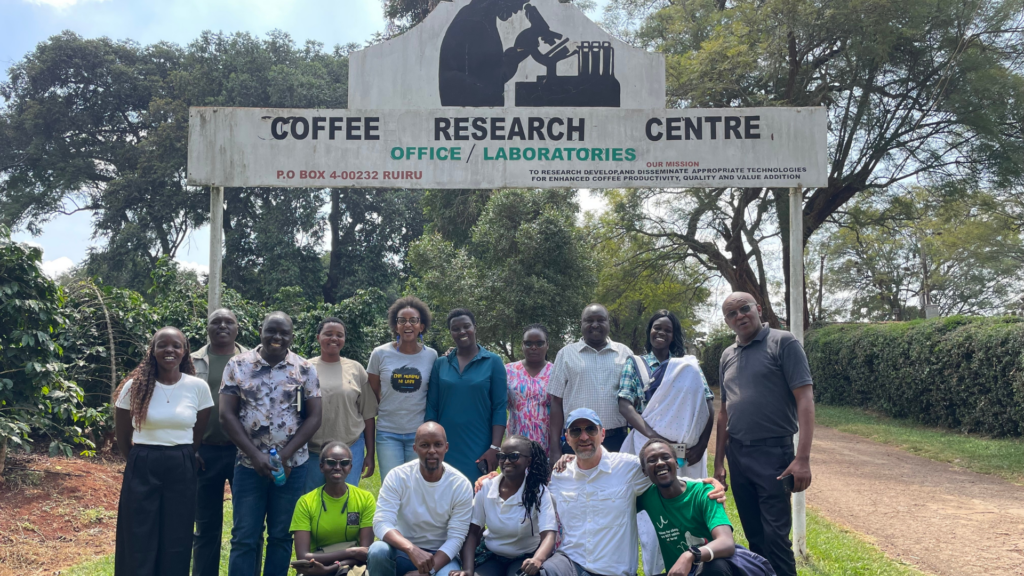
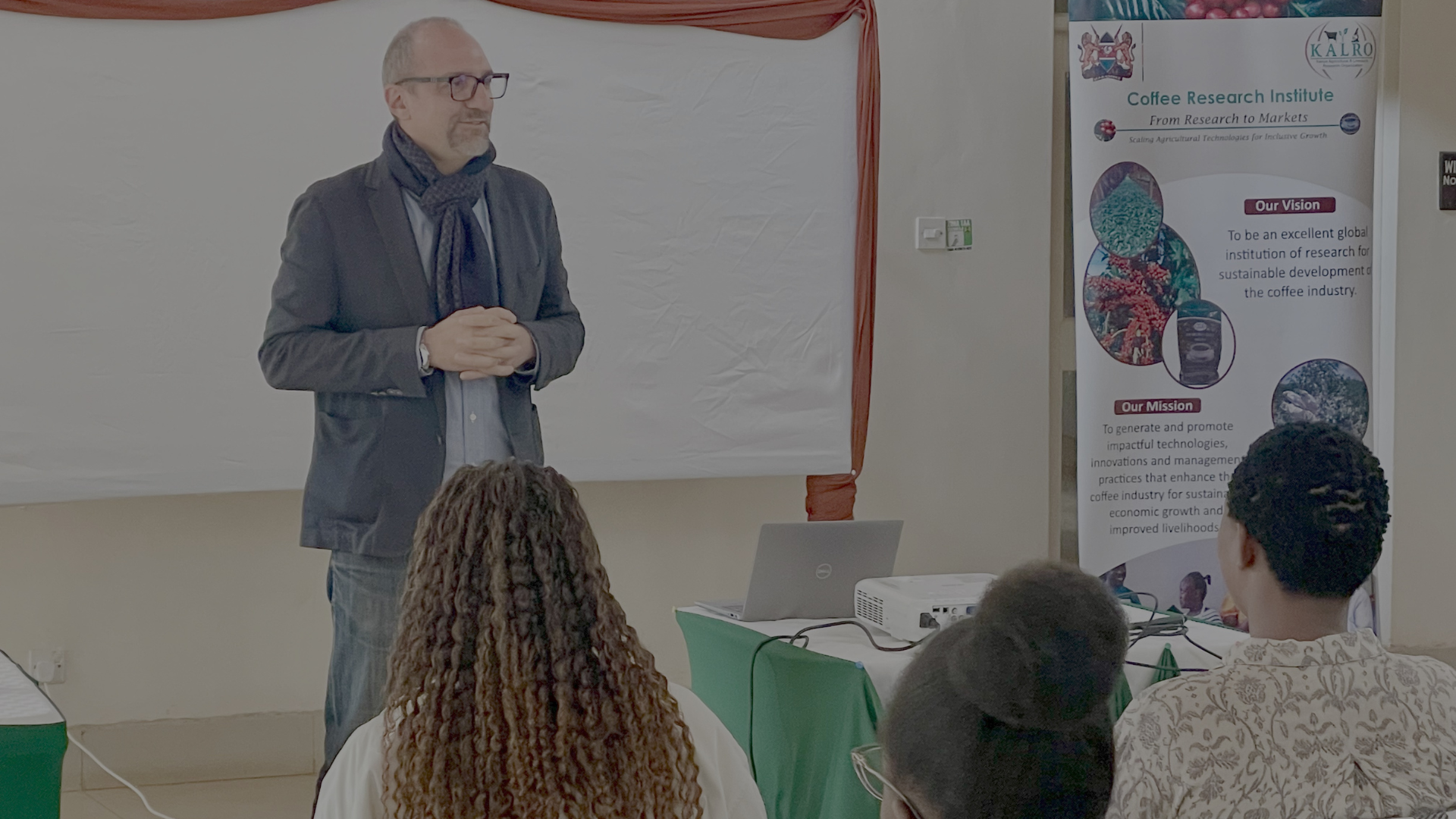
On 9 July 2026, the first module of the Executive Programme in Coffee Innovation and Business concluded at the Coffee Research Institute (CRI) in Ruiru, Kenya. The first edition of the programme has enrolled 25 companies selected from across Kenya’s coffee sector; an industry that employs around six million people in the country and now faces a fragmented production base, price volatility, compliance with international standards, and the mounting impacts of climate change.
The initiative is delivered within the ACT Coffee Programme (Advancing Climate-Resilience and Transformation in African Coffee), implemented by the United Nations Industrial Development Organization (UNIDO). A flagship initiative of Italy’s Mattei Plan for Africa and of the European Global Gateway, funded by Italian Development Cooperation, the ACT Programme brings together public institutions, development partners and the private sector to drive a structural transformation of the African coffee value chain.
Active in Ethiopia, Kenya, Uganda, Tanzania and Malawi — with the ambition of gradually extending across the continent — it strengthens climate resilience, supports sustainable industrial development and promotes greater local value creation from production to export, while improving the livelihoods of smallholder farmers and the rural communities that sustain the sector.
The Executive Programme in Coffee Innovation and Business is one of the ACT Programme’s flagship initiatives dedicated to human capital development, entrepreneurial capacity building and investment in innovation across East Africa’s coffee value chain.
It is implemented by E4Impact Foundation as lead partner, in collaboration with Università Cattolica del Sacro Cuore, Illycaffè and Fondazione Ernesto Illy ETS, the Alumni of the Master in Coffee Economics and Science – Ernesto Illy, Fondazione Lavazza, Slow Food, the Coffee Research Institute and Dedan Kimathi University of Technology.
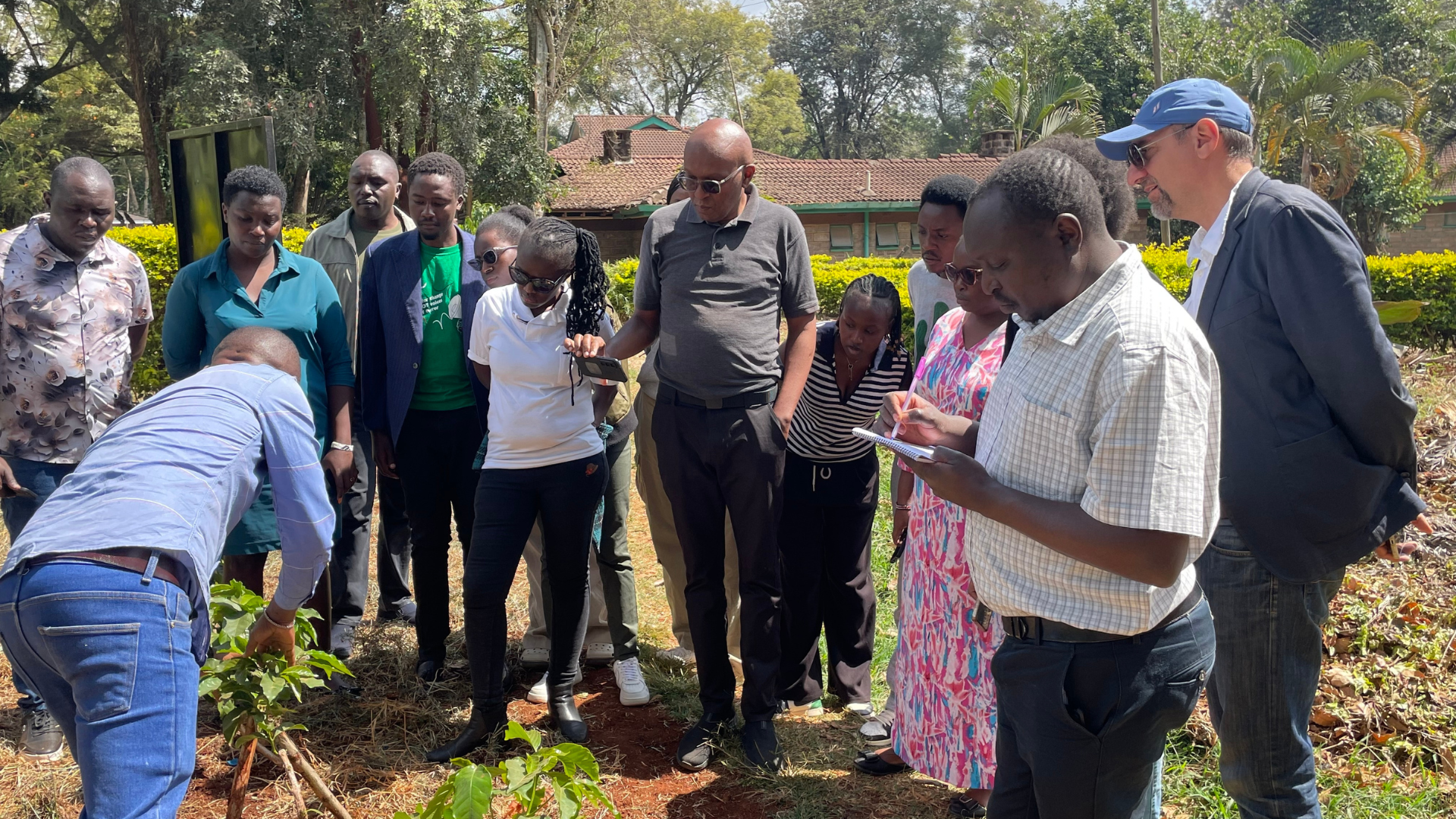
The programme aims to strengthen managerial and entrepreneurial skills across the entire value chain, promote innovation and local transformation, increase the climate resilience of businesses and cooperatives, and facilitate market access and sustainable investment. It supports operators in Kenya’s coffee sector in building sustainable enterprises, driving product valorisation and engaging younger generations.
The course is structured around three complementary modules: the first, focused on upstream stages of the value chain, addresses innovations in coffee production and processing; the second, focused on downstream activities, explores distribution, branding and marketing; the third takes the form of a project work — the development of an individual project or business plan — supported by dedicated mentoring and a final presentation before a jury of partner representatives. Overall, the programme comprises 236 hours of activity: 156 hours of training (80 in person, 26 synchronous, 50 asynchronous) and 80 hours of individual mentoring, running over 8–10 weeks.
“With the Executive Programme in Coffee Innovation and Business, we are investing in human capital as a strategic lever for the sustainable transformation of the coffee value chain. Strengthening entrepreneurial skills, innovation and climate resilience means creating local value, attracting investment and structurally improving the socio-economic conditions of producing communities,” said Andrea De Marco, Programme Manager and Partnership Advisor at UNIDO.
Letizia Moratti, President of the E4Impact Foundation, also commented:
“This programme is a concrete example of effective cooperation between institutions, universities and businesses to strengthen a strategic value chain such as coffee — creating value in producing countries and promoting sustainable, inclusive development. At the E4Impact Foundation, we have long been committed to supporting African entrepreneurship through training and innovation. This is a project I care about deeply because, in my work at the European Parliament, I devoted particular attention to the coffee sector — ensuring that European policies take into account the needs of producers, the sustainability of value chains and the fair valorisation of the product, without placing excessive burdens on prices, businesses and end consumers. Only through an integrated approach, combining international cooperation with forward-looking policies, can we secure a fairer and more resilient future for the entire sector.”
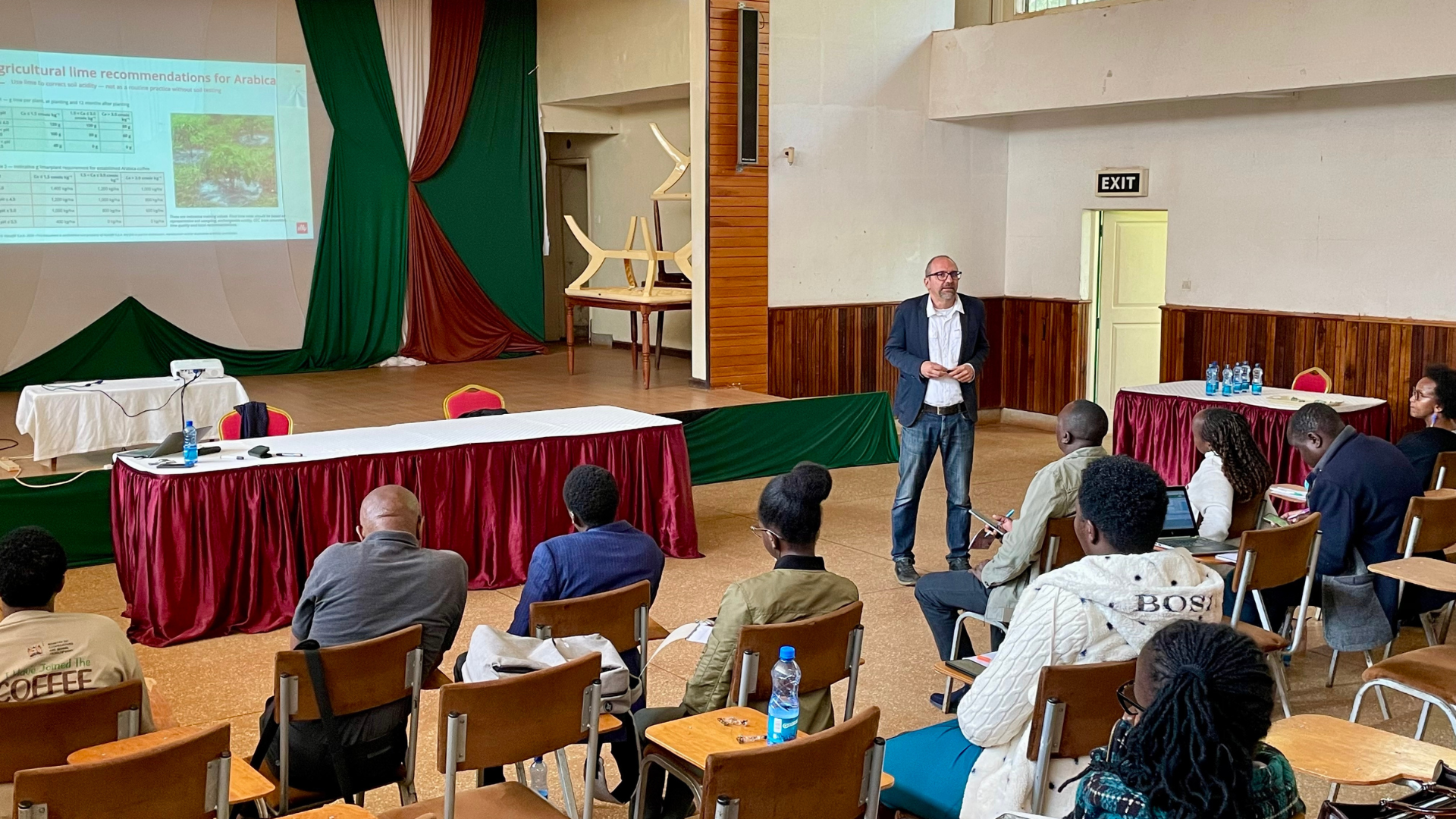
The programme’s scientific and educational dimension was underlined by Prof. Luigi Lucini, Scientific Coordinator of the Executive Programme for Università Cattolica del Sacro Cuore:
“At Università Cattolica del Sacro Cuore, we are sincerely committed to contributing to the Executive Programme in Coffee Innovation and Business because it combines a rigorous scientific method with a concrete commitment to economic and social development. The weekly training plan outlines a journey that accompanies participants along the entire coffee value chain: from upstream innovations in cultivation, production and processing, safety, sustainability and certification, to downstream activities of aggregation, business models, marketing, sensory analysis and access to international markets, through to the project work and dedicated tutoring. This gives the initiative a clear dual role: on the one hand, it translates science, technology and a culture of quality into practical tools for coffee companies and cooperatives; on the other, it strengthens competitiveness, local value creation, inclusion, and more resilient livelihoods for producing communities. By connecting training, innovation and project work, the programme can help participants turn knowledge into sustainable entrepreneurial opportunities and measurable impact for the coffee sector.”
The future of coffee will not be defined only by what is grown in the field, but by the ideas, skills and leadership cultivated alongside it. Through initiatives such as the Executive Programme in Coffee Innovation and Business, the involved actors are investing where transformation truly begins: in people. Because when knowledge takes root, resilience grows, innovation spreads, and the value of coffee extends far beyond the cup.