
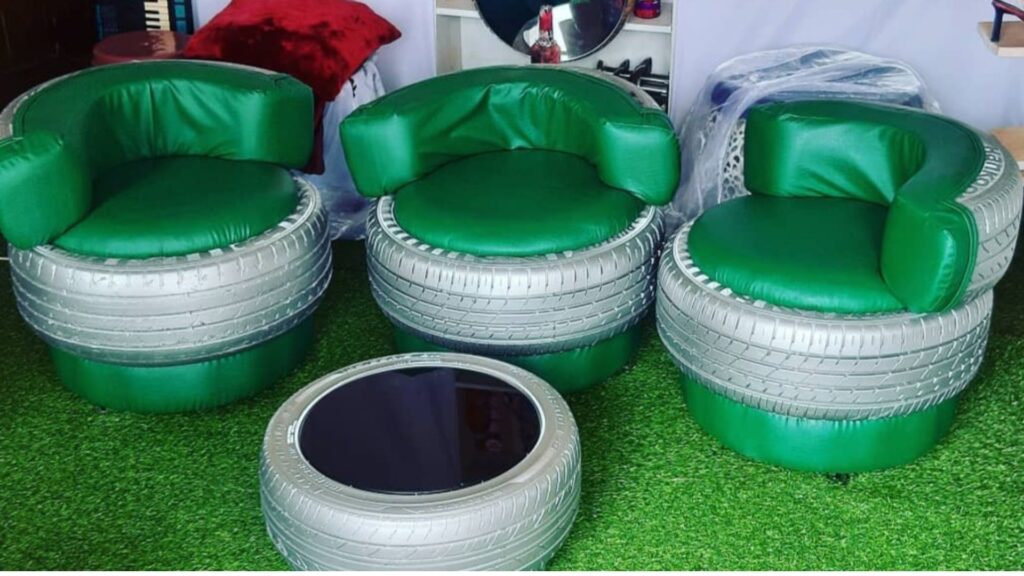
Uganda, like many rapidly urbanizing countries, faces a pressing waste management crisis. Each year, thousands of tires are discarded without regulation—piling up in landfills, clogging drainage systems, and emitting toxic fumes when burned. These tires not only threaten the environment but also contribute to the spread of disease and urban flooding, particularly in major cities like Kampala.
This growing challenge reflects a broader issue: the lack of infrastructure and public awareness around sustainable waste disposal, leaving communities vulnerable to health hazards and climate-related risks.
Karen Kyazze, founder of Karenz Creations Uganda, saw an opportunity for transformation.
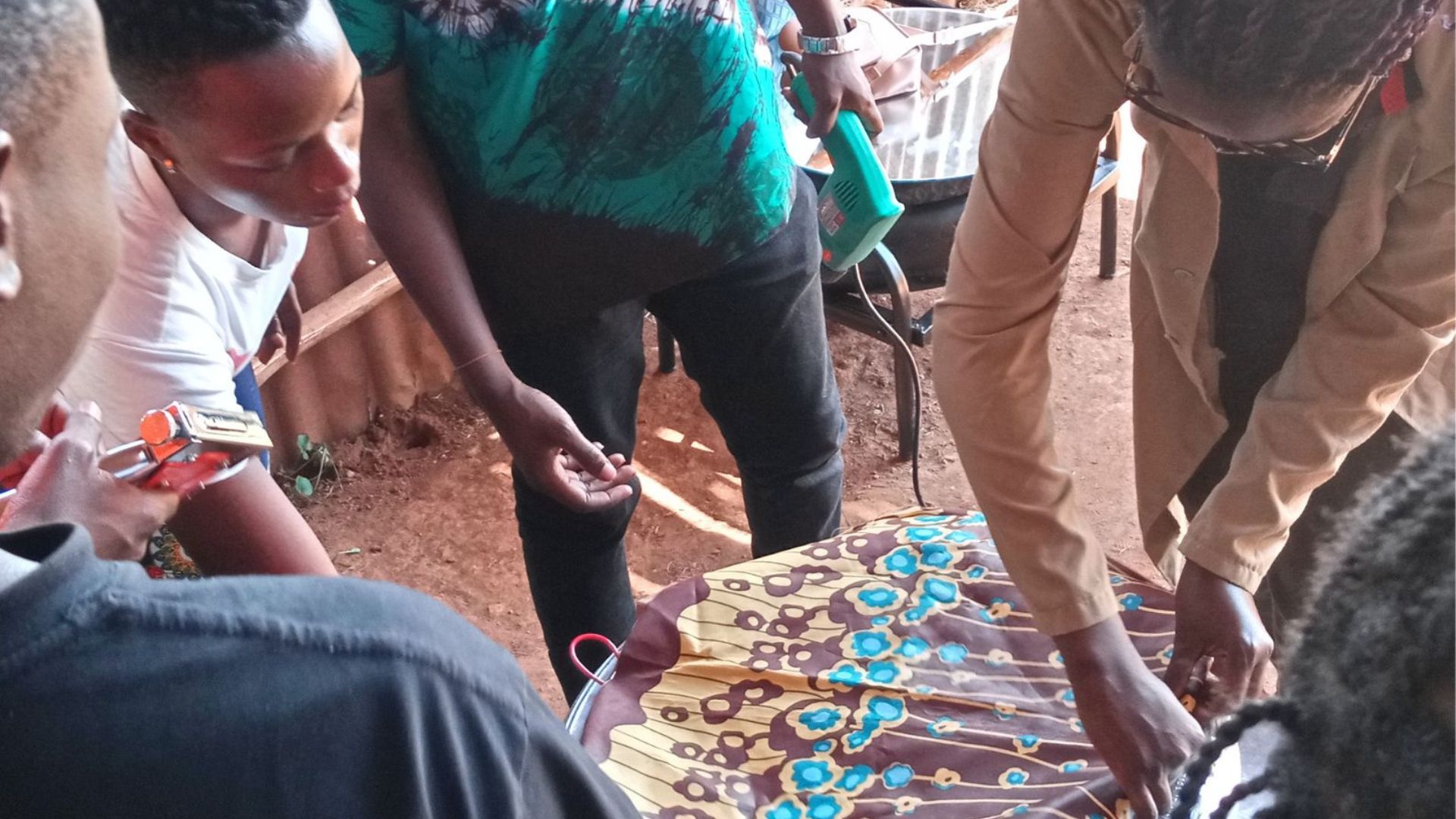
The #E4ImpactEntrepreneur attended the Global MBA in Impact Entrepreneurship in Kampala in 2023. With the support of the MBA program, she has proved that with innovation and purpose, even the most overlooked materials can become drivers of social and environmental change.
“The E4Impact program transformed my mindset, equipping me with structured entrepreneurial skills, leadership confidence, and a resilient approach to turning challenges into opportunities. An even bigger difference was made for my business. Through mentorship and networking, we refined our model, gained knowledge on the importance of evolution, and scaled operations. It all resulted in us gaining recognition as a great Ugandan green enterprise.”
Let’s learn more about Karen having a look at the interview we conducted with her.

1. Could you share a general framework of the services, activities, solutions, and/or benefits that your business has provided over the last few years?
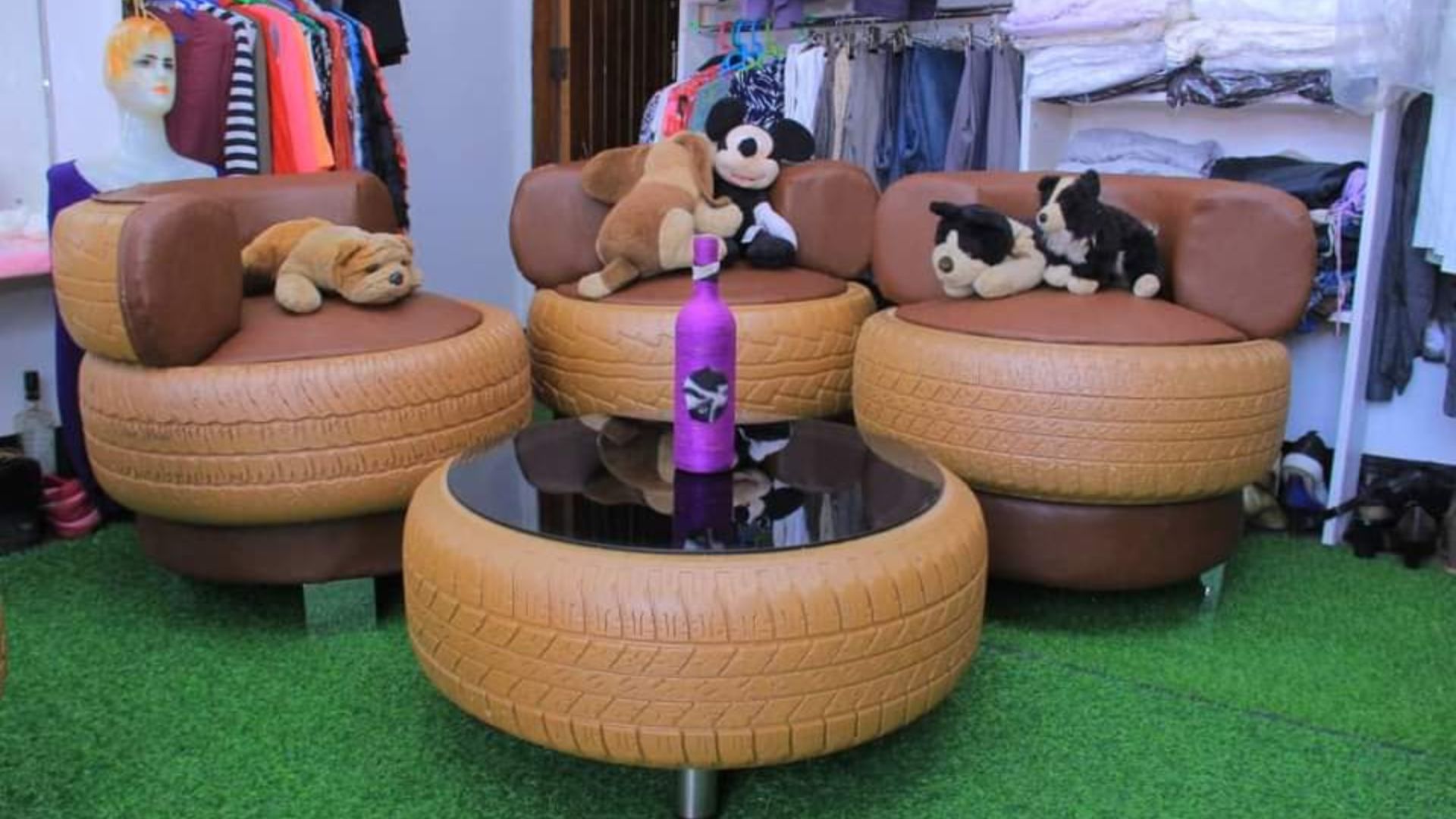
Karenz Creations Uganda transforms waste tires into eco-friendly products—like furniture, construction materials, and farming tools. Through this, we are creating jobs, reducing pollution, and empowering communities through training. Since 2020, we’ve recycled over 1,000 tires, employed 50+ Ugandans (60% women), and expanded to East African markets, with plans to scale innovative solutions like flood barriers and AI-assisted recycling.
2. What are the main achievements of the last 3 years and the main goals you aim to achieve in the next 3 years?
Our main achievement in the last 3 years, from 2021 to 2023, is that we supplied affordable eco-products to 5 East African countries. We’ve recycled over 1,000 tires, created 50+ green jobs (60% women), and expanded to 3 Ugandan cities. What’s more, we won recognition from the UNDP and EU. For the next 3 years, we aim to recycle over 50,000 tires per year, launch Uganda’s first Tire Innovation Hub, and expand to Gulu and Mbarara. But our main objective is to pioneer tire-based flood barriers—targeting 100+ jobs and improving regional climate resilience.

3. How was your business idea born?
In 2018, after losing my father, I found myself amidst grief. To cope with my loss, I channelled my anguish into designing my first upcycled tire table. The act of transforming something discarded into beauty became my therapy. After selling that table, I realized two truths. First, I saw a hidden opportunity in Uganda’s waste crisis. Every day, I saw mountains of tires choking Kampala’s drains, leaching toxins when burned, and breeding malaria mosquitoes. And all these abundant tires were free raw materials—durable, weatherproof. Secondly, I came to the conclusion that circular design could heal communities. That first sale proved demand for sustainable Ugandan-made products. At that moment, I saw a double impact: cleaning cities while employing youth to craft solutions from waste.
This became a turning point—from my grief to impact. With a grinding machine and relentless hustle, I grew from one-woman workshops to training teams—prioritizing single mothers and former waste pickers. My partnerships with the Youth Office and boda-boda riders provided me with the tire supply, and women in the corporate world became my first clients.
4. Which main challenges were you experiencing in your business, if any?
There were a few. We faced high production costs, market skepticism, financing barriers, weak policies, and skills gaps. Overcoming these was tricky, but thanks to our partnerships and innovations, such as Uganda’s first tire shredder, grants, advocacy, and training programs like Karenz Academy, we were able to overcome these challenges. We became resilient and grew stronger. Each challenge fueled solutions—boda-boda collaborations helped us secure materials, the EU grant enabled scaling, and community campaigns shifted perceptions, proving that Uganda’s waste crisis could become a source of jobs and sustainable products.
5. Could you tell us about a particular satisfactory moment in your entrepreneurial activity?
The most fulfilling moment was watching children play on our first upcycled tire children’s stools, transforming what was once trash into laughter and joy—proving our concept could create both environmental and social impact. This breakthrough not only validated our business model but also led to our first major resort contract, taking us from small crafts to scalable community solutions.

6. What impact have you seen in your environment, and what impact do you aim to create for your beneficiaries in the future?
We’ve witnessed a transformative shift in attitudes toward waste tires—from viewing them as trash to valuing them as raw materials—while inspiring similar upcycling startups and reducing tire pollution in Kampala’s communities. Today, we create jobs and sustainable products from waste; tomorrow, we aim to scale into East Africa’s first tire innovation hub, empowering 100+ youth and women with green skills while tackling climate resilience through tire-based solutions.
7. What has been the main challenge you had to overcome in your entrepreneurial experience? How have you managed to overcome it?
The main challenge for us was overcoming deep-rooted market skepticism about upcycled products, as many Ugandans initially perceived tire furniture as “low-quality junk” rather than sustainable innovation. We launched hands-on community workshops to demonstrate craftsmanship, partnered with influencers to rebrand upcycling as “eco-chic”, and secured endorsements from schools and NGOs. We managed to shift such negative perceptions and prove the products’ durability through a 2-year warranty guarantee.
8. In your opinion, what are the main qualities an entrepreneur should have?
An entrepreneur needs resilient grit to persevere through failures and adaptive creativity to turn problems into opportunities, combined with empathic leadership to inspire teams and communities. In contexts like Uganda, business owners need to be resourceful—they must know how to utilize limited tools to achieve the best results. Another quality is cultural intelligence. Designing solutions that fit local needs transforms vision into tangible impact.
9. Is there a person you are inspired by, i.e. an entrepreneur or a particular mentor?
I’m deeply inspired by Dr. Victoria Kisyombe, the Tanzanian entrepreneur who pioneered SELFINA’s micro-leasing model, proving that tenacity and innovative financing can empower women even in male-dominated industries. Like her, we’ve turned systemic barriers, in our case Uganda’s waste crisis, into opportunities—showing how local entrepreneurs can drive both profit and social change through relentless creativity.
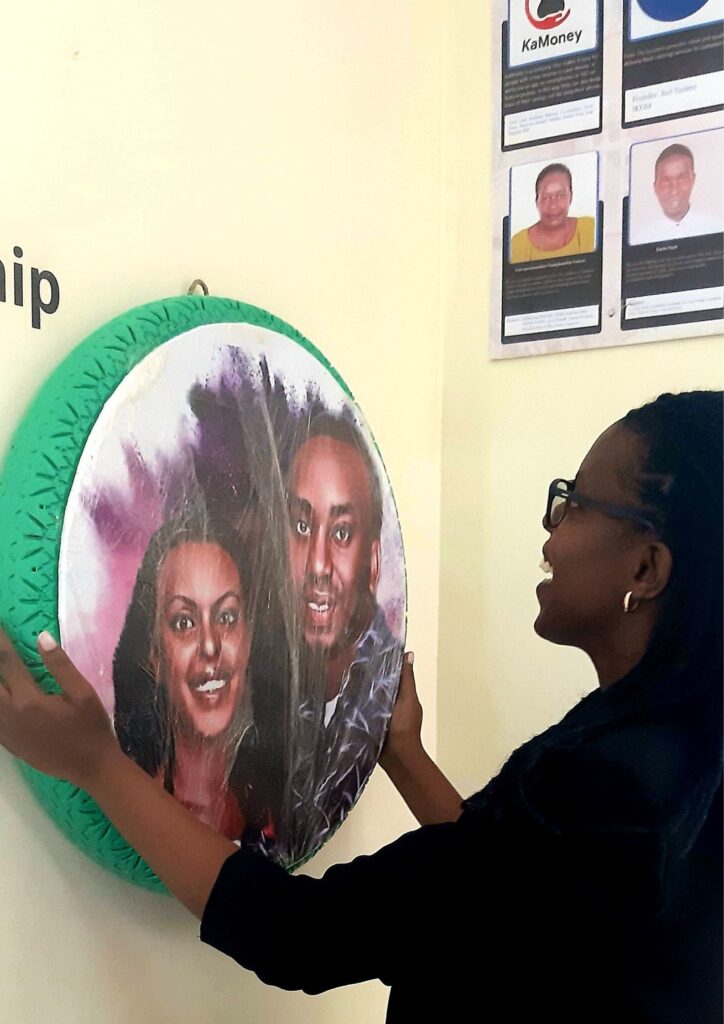
10. Finally, what would you suggest to a new-born entrepreneur?
Start by solving a real problem you deeply understand—passion alone won’t sustain you, but purpose will. Stay lean, test fast, and listen obsessively to your customers; their feedback is your best roadmap. Build a network of mentors and embrace resilience—our markets reward those who pivot creatively amid challenges like power cuts or funding gaps.
11. Any final comments/suggestions you’d like to share?
Entrepreneurship is a journey of relentless learning—embrace failures as data, stay rooted in your “why,” and remember that every global solution once began as someone’s local problem.